Introduction
GLP-1 drugs like Ozempic and Wegovy have transformed how millions of people approach weight loss. About 1 in 8 American adults have now tried one. The results can be dramatic — double-digit weight loss in months. But new research published in early 2026 is raising an important question: what exactly are you losing? The answer might surprise you. A significant chunk of that weight isn’t just fat — it’s muscle.
What the Research Says
GLP-1 drugs work by suppressing appetite, slowing gastric emptying, and modifying how your brain responds to food cues. They’re remarkably effective at reducing body weight. But your body doesn’t automatically know to only burn fat when calorie intake drops — it also breaks down muscle for energy, especially if you’re not actively using those muscles.
A systematic review of 22 clinical trials published in Metabolism (2025) found that on average about 25% of total weight lost on GLP-1 medications came from lean mass — muscle, bone density, and other non-fat tissue. For semaglutide specifically (the drug in Ozempic and Wegovy), data from the landmark STEP 1 trial showed approximately 40% of weight lost came from lean tissue (SAGE Open Medical Case Reports, 2025). That’s nearly 7 kg of lean mass in people who lost around 15 kg total.
Muscle loss matters because muscle is your body’s metabolic engine. More muscle means better blood sugar control, a faster resting metabolism, stronger bones, and better balance as you age. Sarcopenia — age-related muscle loss — affects 10–50% of adults over 60 and is linked to falls, fractures, and higher surgical complication risk (StatPearls, 2023).
A systematic review of 22 trials found ~25% of GLP-1 weight loss comes from lean mass. For semaglutide specifically, the figure rises to ~40% (STEP 1 trial data).
Metabolism, 2025. PMID: 39719170. SAGE Open Med Case Rep, 2025. PMC12536186How do GLP-1 drugs compare to bariatric surgery? A January 2026 JAMA Network Open study tracked body composition over 24 months and found surgery reduced fat mass by 49.7% vs 18.0% for GLP-1 drugs — nearly 3× more fat burned. But surgery also caused 3.5× more lean mass loss (11.7% vs 3.3%). GLP-1 drugs are gentler on muscle; surgery produces more dramatic fat loss but at greater cost to lean tissue.
Why It Matters for You
If you’re taking a GLP-1 drug to improve your health long-term but you’re quietly losing muscle along the way, you may be undermining some of those gains. The good news: this isn’t inevitable. Research shows you can protect your muscles with the right interventions.
The SEMALEAN study — a 12-month real-world trial of semaglutide — found that lean mass loss actually stabilized after 7 months, and handgrip strength improved by 4.1 kg by month 12 (Diabetes, Obesity & Metabolism, 2025). The body can adapt, but it needs the right signals.
In that same study, the proportion of participants with sarcopenic obesity dropped from 49% to 33% over 12 months — meaning fewer people ended the year in a muscle-depleted state than started it.
Practical Takeaways
-
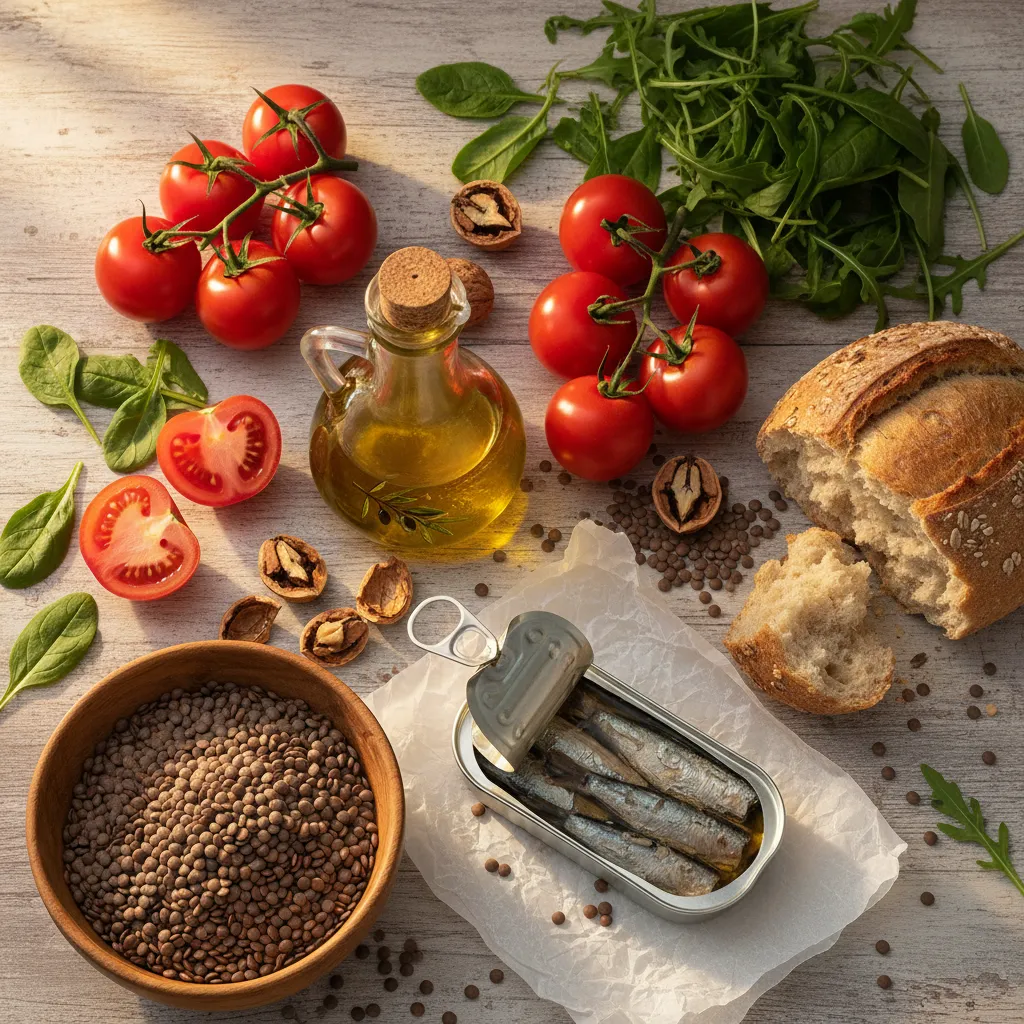
Hit your protein target. Expert consensus guidelines recommend at least 1.2 g per kg of body weight per day, spread across meals (Diabetes, Obesity & Metabolism, 2024). For an 80 kg person, that’s roughly 96 g daily. Think chicken, fish, eggs, Greek yogurt, legumes.
-
Add resistance training 2–3 times per week. You don’t need a gym membership. Bodyweight exercises — squats, push-ups, rows — count. Work all major muscle groups, 8–12 reps per set. Even this modest intervention meaningfully shifts outcomes.
-
Go further if you can. A 2025 case series found that people combining semaglutide with resistance training 3–5 days/week and protein intake of 1.6–2.3 g/kg lost as little as 8.7% of total weight as lean mass — and two actually gained muscle while losing fat (SAGE Open Medical Case Reports, 2025).
-
Don’t go too low on calories. Aggressive restriction accelerates muscle loss. GLP-1 drugs already suppress appetite hard — make sure what you do eat is nutrient-dense.
-
Track how you feel, not just the scale. Fatigue, weakness, and loss of strength are early signs you might be losing more muscle than you should.
Frequently Asked Questions
Do all GLP-1 drugs cause the same amount of muscle loss?
Not quite. Semaglutide (Ozempic/Wegovy) may cause ~40% of total weight lost as lean mass, while tirzepatide (Mounjaro/Zepbound) appears closer to 26%, based on the 2025 meta-analysis of 22 trials.
Is bariatric surgery worse for muscle?
Surgery causes more absolute lean mass loss (11.7% vs 3.3%), but also produces far more fat loss (49.7% vs 18.0%). The right choice depends on your overall health goals — this is a conversation for your doctor.
Can you build muscle while on Ozempic?
Yes. The 2025 case series documented people who combined semaglutide with resistance training (3–5 days/week) and high protein (1.6–2.3 g/kg) and actually increased lean soft tissue while still losing fat. It requires deliberate effort, but it’s achievable.
References
- SAGE Open Medical Case Reports. Lean mass changes on semaglutide. 2025. PMC12536186
- Metabolism. Systematic review of 22 GLP-1 trials. 2025. PMID: 39719170
- JAMA Network Open. Bariatric surgery vs GLP-1 drugs. 2026. DOI: 2843518
- Diabetes, Obesity & Metabolism. Expert consensus on protein and GLP-1. 2024. DOI: 10.1111/dom.15728
- Diabetes, Obesity & Metabolism. SEMALEAN 12-month trial. 2025. PMC12673431
- StatPearls. Sarcopenia overview. 2023. NCBI Bookshelf
- KFF. GLP-1 drug usage poll. 2024. KFF Poll
The Bottom Line
GLP-1 drugs are genuinely effective tools — they work. But “weight loss” and “fat loss” aren’t always the same thing, and the difference matters for your health over time. The emerging picture from 2025–2026 research is clear: these medications work best when paired with two simple habits, regular strength training and adequate protein. Do that, and you can keep most of your muscle while losing fat. Skip it, and you might end up lighter on the scale but metabolically worse off. If you’re on one of these drugs, the most important conversation you can have right now is with your doctor or a registered dietitian about your protein targets and exercise plan.