Introduction
You already eat quercetin every day. Every time you bite into an apple or slice a red onion — you are getting a dose of one of the most studied anti-inflammatory compounds in nature. But 2025 brought the most compelling human evidence yet. A gold-standard randomized controlled trial published in Aging Cell found that 1,000 mg/day of quercetin cut irregular heartbeat rates from 18% down to just 4% in patients with blocked heart arteries. That’s a result hard to ignore.
What the Research Says
Quercetin is a plant pigment classified as a flavonol, a subgroup of flavonoids. It gives many fruits and vegetables their yellow, red, or orange color. According to a 2025 review in Nutrients (Nutrients, 2025), quercetin suppresses inflammation through at least two well-characterized molecular pathways: direct inhibition of the NF-kB signaling cascade and activation of the longevity-linked enzyme SIRT1.
NF-kB is one of the master switches that turns on inflammatory gene expression throughout the body. When quercetin blocks it, downstream pro-inflammatory cytokines — including TNF-alpha and IL-6 — drop. That’s a meaningful reduction in the chronic, low-grade inflammation implicated in heart disease, metabolic syndrome, and accelerated aging.
The clinical picture from a 2023 umbrella review covering 18+ randomized controlled trials found quercetin reduced systolic blood pressure by 1.9 mmHg and significantly lowered fasting insulin across diverse populations and dosing protocols (Phytotherapy Research, 2023). Modest individually, but a consistent cardiometabolic signal.
The 2025 Montreal Heart Institute trial pushed the evidence further. In 97 patients undergoing coronary artery disease surgery, those given 1,000 mg/day of quercetin saw post-operative atrial fibrillation fall from 18% to 4% — a statistically significant result (p=0.033) and a 78% relative risk reduction in a hard-to-treat surgical complication (Aging Cell, 2025).
Quercetin 1,000 mg/day reduced post-operative atrial fibrillation from 18% to 4% in a double-blind RCT of 97 CAD patients.
Mury et al., Aging Cell, 2025. DOI: 10.1111/acel.70108Why It Matters for You
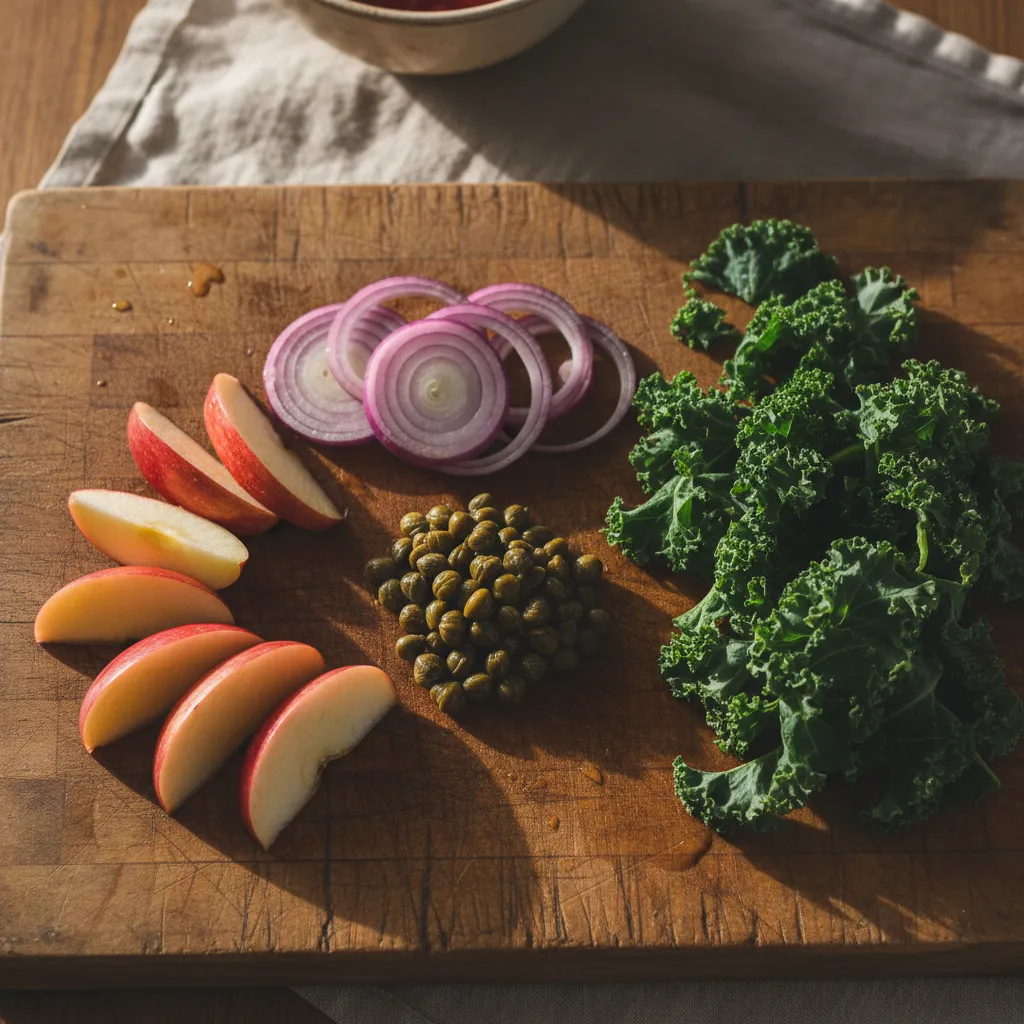
Capers contain roughly 234 mg per 100g — the highest known food source by a wide margin. Red onions, kale, and apples with their skins also deliver meaningful amounts. But the therapeutic doses used in RCTs — typically 500-1,000 mg/day — are difficult to hit through diet alone.
One important caveat: the evidence skews toward men. Several RCTs showed stronger blood pressure and metabolic effects in male participants. This doesn’t mean quercetin doesn’t work for women — the anti-inflammatory mechanisms are sex-neutral at the cellular level. But the magnitude of cardiometabolic benefit appears smaller in women based on current data.
Practical Takeaways
-
Eat quercetin-rich foods daily. Raw capers, red onions, kale, and apples (with skin) are the best sources. Even if you can’t hit therapeutic doses, 5-30 mg per day from food contributes to long-term anti-inflammatory intake.
-
If considering supplementation, talk to your doctor. Trials used 500-1,000 mg/day. Quercetin may interact with blood thinners and some antibiotics — worth checking if you’re on any regular medications.
-
Cook your onions lightly. Research suggests light cooking preserves quercetin content in red onions better than boiling or prolonged heat exposure.
-
Be cautious about sex-differential claims. The mechanisms are universal, but the size of benefit may differ between men and women. More trials enrolling women are needed before drawing firm conclusions about sex-stratified dosing.
Frequently Asked Questions
How much quercetin should you take daily?
Clinical trials used 500 mg to 1,000 mg daily. The Montreal Heart Institute trial achieved significant results at 1,000 mg/day. Always check with a healthcare provider before starting supplementation.
Can you get enough quercetin from food alone?
Probably not at therapeutic doses. Even capers — the highest source at 234 mg per 100g — would require very large quantities to approach RCT doses. Most people get only 5-30 mg per day from diet.
Does quercetin help with viral infections?
Preliminary lab data suggests potential antiviral properties, but the evidence doesn’t yet match the quality of the cardiac and metabolic data. More trials needed.
References
- Aging Cell. Quercetin and post-operative atrial fibrillation. 2025. DOI: 10.1111/acel.70108
- Phytotherapy Research. Umbrella review of quercetin trials. 2023. DOI: 10.1002/ptr.7971
- Nutrients. Quercetin mechanisms and SIRT1 activation. 2025. DOI: 10.3390/nu17213316
The Bottom Line
Quercetin is one of the few anti-inflammatory compounds with a genuine randomized controlled trial showing a clinically meaningful cardiovascular effect — reducing post-operative atrial fibrillation by 78%. You already eat it daily in small amounts through apples, onions, and capers, and adding more quercetin-rich foods to your diet is a low-risk, well-supported dietary choice. At therapeutic doses found in supplements, it may offer additional cardiovascular protection, though more trials — especially in women — would strengthen the case.