Introduction
What if the problem isn’t salt itself — but what’s in your salt? The landmark SSaSS study followed over 20,000 people for nearly five years and found something remarkable: swapping regular table salt for a potassium-enriched substitute dramatically reduced stroke, heart attack, and early death. Here’s what the science shows and how to apply it starting today.
What the Research Says
The SSaSS trial, published in the New England Journal of Medicine in 2021, was a massive, rigorous study conducted across 600 rural villages in China. Researchers randomly assigned over 20,000 participants — all with a history of stroke or high blood pressure — to either continue using regular salt or switch to a substitute containing roughly 75% sodium chloride and 25% potassium chloride (NEJM, 2021).
20,000+ participants, 4.74 years follow-up. Swapping to potassium-enriched salt substitute reduced stroke risk by 14%, major cardiovascular events by 13%, and all-cause mortality by 12%. Benefits grew stronger over nearly five years.
Neal B, et al. NEJM. 2021. PMID: 34459569Stroke Risk Dropped by 14%
The primary finding was striking. Over an average follow-up of 4.74 years, the group using the salt substitute experienced 14% fewer strokes (NEJM, 2021). That’s not a marginal effect — it’s a meaningful reduction in one of the world’s leading causes of death and disability.
Major Cardiovascular Events Fell by 13%
The salt substitute group saw a 13% reduction in major adverse cardiovascular events — a combined measure including heart attacks, strokes, and cardiovascular deaths (NEJM, 2021). Benefits grew stronger over nearly five years of follow-up.
Total Mortality Decreased by 12%
People using the salt substitute were 12% less likely to die from any cause during the study period (NEJM, 2021). That’s a hard endpoint — not a surrogate marker or a lab value, but actual lives saved.
Blood Pressure Improved Meaningfully
A 2022 meta-analysis of 21 randomized controlled trials with nearly 32,000 participants found that salt substitutes lowered systolic blood pressure by an average of 4.6 mmHg and diastolic by 1.6 mmHg (Heart, 2022). Every 5 mmHg reduction in systolic BP at the population level translates to roughly 10% lower risk of major cardiovascular events.
Safety Concerns Were Minimal
The SSaSS trial monitored potassium levels carefully and found no increase in serious adverse events from hyperkalemia (NEJM, 2021). A 2024 review of 32 hypertension and 14 kidney disease clinical guidelines noted that potassium-enriched salt substitutes are safe for the vast majority of people, though those with advanced chronic kidney disease should consult their doctor before making the switch (Hypertension, 2024).
Why It Matters for You
How does a potassium-enriched salt substitute lower blood pressure?
Replacing some sodium chloride with potassium chloride creates a dual benefit. Less sodium means less fluid retention and lower blood pressure. More potassium acts as a natural vasodilator, helping blood vessels relax and encouraging kidneys to excrete excess sodium (Heart, 2022).
The beauty of this approach is that it doesn’t require a complete dietary overhaul. You’re making one swap — the salt shaker on your table — and reaping benefits comparable to a blood pressure medication, without side effects or cost.
Practical Takeaways
Find Potassium-Enriched Salt Substitutes at Your Grocery Store
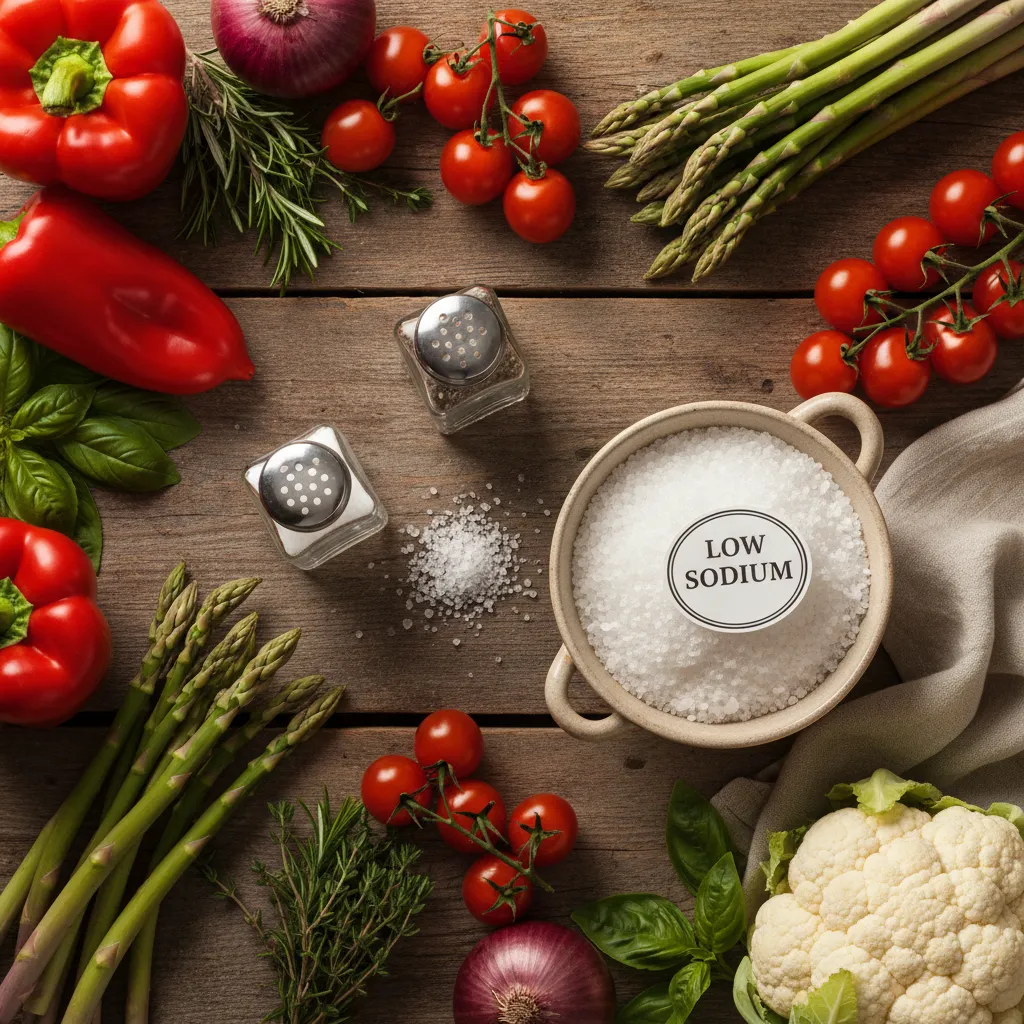
Brands like Morton’s Lite Salt, Nu-Salt, and LoSalt are widely available. Look for potassium chloride as a primary ingredient alongside sodium chloride. Typical formulations are 50–70% sodium chloride and 30–50% potassium chloride.
Start Replacing Salt in Cooking and at the Table
Begin by using the substitute when cooking at home and seasoning at the table. Most people find the taste nearly identical to regular salt. If you notice a slight “metallic” or “cooling” sensation, try mixing 50-50 with regular salt.
Use About the Same Amount as Regular Salt
Swap them one-for-one in recipes. A 2024 review found that over 80% of participants couldn’t reliably distinguish between regular salt and a 50:50 sodium-potassium blend in cooked foods (Hypertension, 2024).
Check With Your Doctor if You Have Kidney Disease
If you have advanced kidney disease (stage 4 or 5), are on dialysis, or take medications that raise potassium levels (ACE inhibitors, ARBs, potassium-sparing diuretics), talk to your healthcare provider first (Hypertension, 2024).
Pair the Swap With Other Heart-Healthy Habits
The SSaSS trial showed benefits even without other dietary changes. But you can amplify effects by combining the swap with potassium-rich foods (leafy greens, beans, bananas), staying active, and limiting ultra-processed foods.
Frequently Asked Questions
Will a potassium-enriched salt substitute taste different?
Most people find them very similar to regular salt. If you’re sensitive to the taste, start with a 70:30 blend and gradually increase the potassium content.
Can I use salt substitutes for baking and preserving?
Yes, for most cooking applications including baking, roasting, and sautéing. They’re not ideal for fermentation or pickling, where high sodium concentrations provide antimicrobial protection. For canning, stick with regular salt.
How much potassium am I actually getting?
A teaspoon provides about 800–1,000 mg of potassium — roughly 20–25% of the recommended daily intake. For perspective, a medium banana provides about 400 mg. Using a substitute throughout the day significantly boosts potassium while lowering sodium.
References
- Neal B, Wu Y, Feng X, et al. Effect of Salt Substitution on Cardiovascular Events and Death. New England Journal of Medicine. 2021. PMID: 34459569
- Yin X, Rodgers A, Perkovic A, et al. Effects of salt substitutes on clinical outcomes: a systematic review and meta-analysis. Heart. 2022. PMID: 35945000
- Xu X, Schutte AE. Potassium-Enriched Salt Substitutes: A Review of Recommendations in Clinical Management Guidelines. Hypertension. 2024. PMID: 38284271
The Bottom Line
The SSaSS study makes a compelling case: swapping regular salt for a potassium-enriched substitute is one of the simplest, most evidence-backed dietary changes for heart health. It’s safe for most people, requires no willpower, and delivers measurable reductions in stroke, cardiovascular events, and early death. Next time you reach for the salt shaker, make the swap.
This article is for informational purposes only and does not constitute medical advice. Always consult a qualified healthcare provider before making changes to your diet or health regimen.